
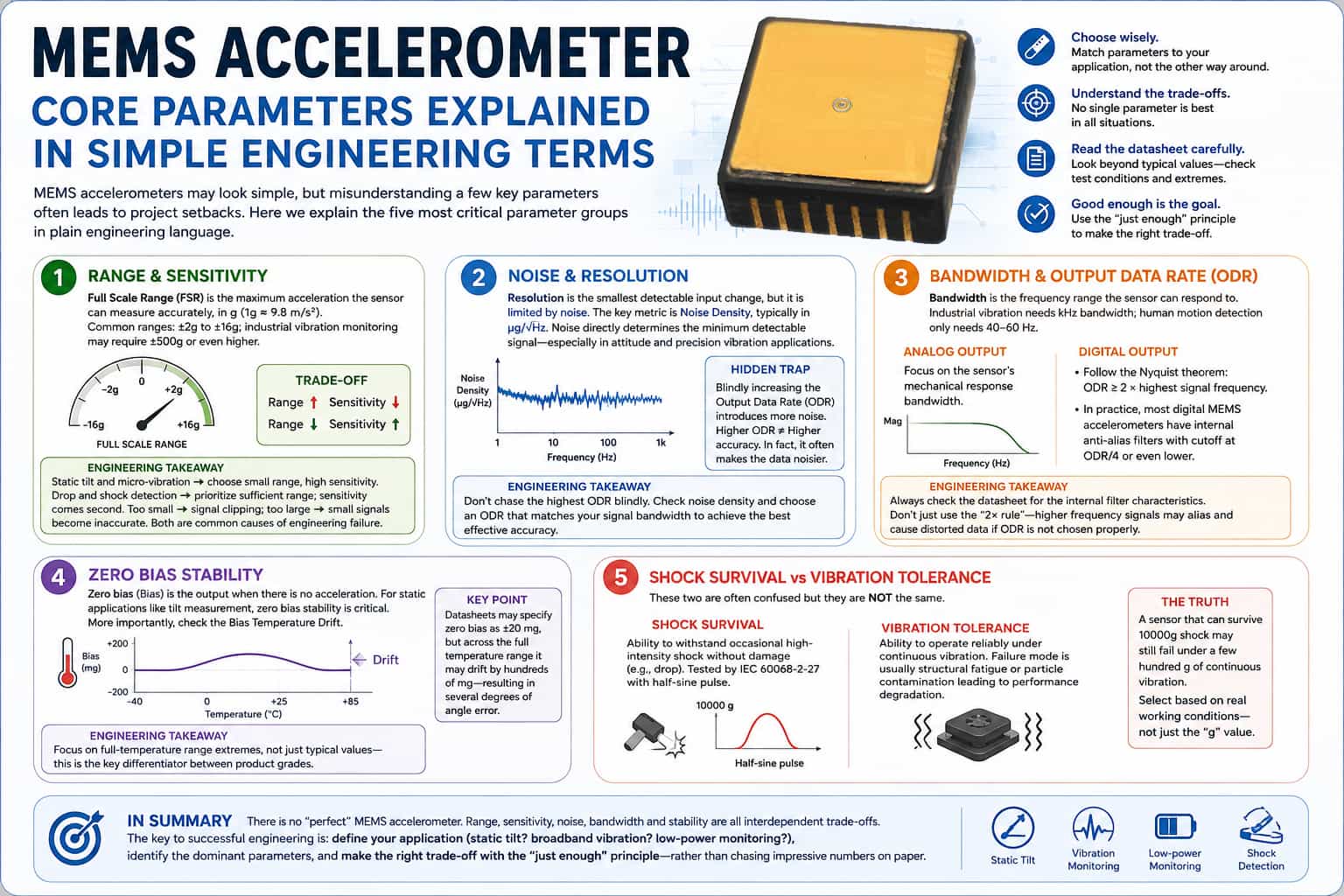
尽管MEMS加速度计在工程选型过程中看似简单,但对一些核心参数的误解往往会导致代价高昂的挫折。以下部分将使用工程术语解释五组最关键的参数,避免过于抽象的理论。 **满量程范围和灵敏度** 满量程是指传感器能够精确测量的最大加速度,通常以*g*表示(其中1*g* ≈ 9.8 m/s²)。标准应用的满量程范围通常为±2*g*至±16*g*,而工业振动监测可能需要±500*g*或更高。量程和灵敏度通常成反比;更高的量程会降低对微弱信号的灵敏度。选择逻辑很简单:对于静态倾斜测量或微振动监测,选择量程低、灵敏度高的仪器;相反,对于跌落或冲击检测,灵敏度是次要的,则优先考虑量程足够大的仪器。量程过低会导致信号削波,而量程过高则会导致小信号精度下降——这两种情况都是工程故障的常见原因。 噪声和分辨率 分辨率代表传感器能够区分的最小输入变化,但它受噪声限制。关键指标是噪声频谱密度,通常以 µg/√Hz 为单位。噪声直接决定了最小可检测信号;在姿态传感和精密振动监测等应用中,噪声水平比分辨率更值得关注。一个常见的工程误区是盲目提高输出数据速率 (ODR),这会引入更多噪声。许多开发人员将 ODR 推至最大值,结果却发现生成的数据充斥着噪声;根本原因是更高的采样率通常会降低有效精度。 带宽和输出数据速率 (ODR) 带宽定义了传感器能够响应的输入信号的频率范围。工业振动监测需要几千赫兹的带宽,而人体运动跟踪则只需 40–60 Hz 即可。对于模拟输出,重点在于传感器的机械响应带宽;对于数字输出,则适用奈奎斯特采样定理——这意味着 ODR 必须至少是最高信号频率的两倍。在实际工程中,一个更为微妙的问题是,大多数数字 MEMS 加速度计的内部抗混叠滤波器截止频率仅为 ODR 的四分之一(或更低)。如果在机械设计阶段仅基于“2 倍”规则选择 ODR,则高频信号混叠将直接导致数据失真。务必参考数据手册中的滤波器特性,而不要依赖理论公式。 偏差稳定性 偏置是指在无加速度情况下的输出值。对于倾斜检测等静态应用,偏置稳定性至关重要。偏置温度漂移更为关键。某些器件的数据手册中可能标明偏置为±20毫克,但在整个温度范围内却可能漂移数百毫克——这种误差会导致角度偏差达数度。这是区分不同等级产品的关键所在;必须关注整个温度范围内的极端值,而不是典型值。 冲击极限与振动容差 这些参数很容易混淆。抗冲击性是指设备在不损坏的情况下承受偶尔的高强度冲击(例如跌落)的能力;测试标准为IEC 60068-2-27,采用半正弦脉冲。相反,抗振性是指设备在持续振动下长期可靠运行的能力,其失效模式包括结构疲劳或颗粒物污染导致的性能下降。 两者不可互换;能够承受10,000g冲击的传感器,在仅几百g的持续振动下也可能失效。选择传感器时,必须基于实际工作环境,而不能仅仅优先考虑最高的“g值”。 总之,选择MEMS加速度计没有“通用参数”;量程、灵敏度、噪声、带宽和稳定性等因素之间存在固有的权衡关系。成功的工程实现依赖于明确定义应用场景(例如,静态倾斜、宽带振动或低功耗监测),识别主要参数,并基于“足够”原则进行选择,而不是一味追求纸面上漂亮的参数。
阅读更多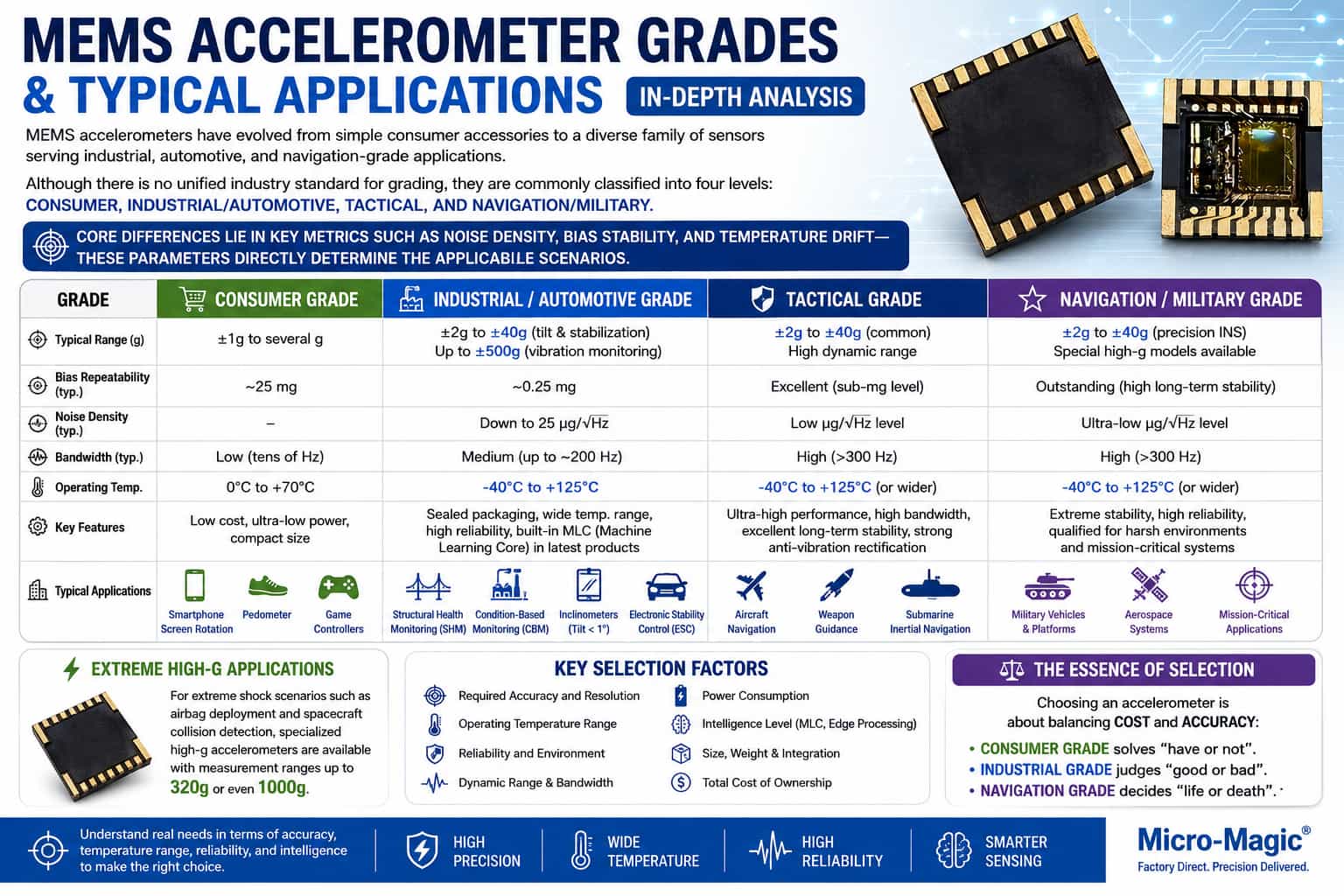
MEMS加速度计已从早期的消费电子配件发展成为涵盖工业、汽车乃至导航级应用的多元化传感器系列。由于缺乏统一的行业标准,它们通常根据性能(从低到高)分为消费级、工业/汽车级、战术级和导航/军用级。这些等级之间的核心区别在于噪声密度、偏置稳定性和温度漂移等关键指标;这些参数直接决定了它们是否适用于特定的应用场景。 消费级加速度计成本低、功耗低,测量范围通常为±1g到几g,带宽也相对较窄。由于其偏置重复性较差(通常在25mg左右),因此主要用于对精度要求不高的运动传感应用,例如智能手机屏幕旋转、计步和游戏控制器。 工业级和汽车级器件的性能提升可达十倍至百倍,典型偏置重复性可达 0.25mg,噪声密度低至 25μg/√Hz。它们的测量范围更广——从倾斜传感的 ±2g 到平台稳定控制的 ±40g——部分型号的振动监测精度甚至高达 ±500g。这些器件通常采用气密封装,以确保在 -40°C 至 +125°C 的宽温度范围内可靠运行。典型应用包括桥梁和风力涡轮机的结构健康监测 (SHM)、工厂设备的状态监测 (CBM)、倾角仪和电子稳定控制 (ESC) 系统。对于倾斜精度要求优于 1° 的应用,此类传感器至关重要。最新的工业级产品还可能集成嵌入式机器学习核心 (MLC),直接在传感器层面处理推理算法,从而实现本地决策。 战术级和导航级传感器优先考虑极致性能,用于飞机导航、武器制导和潜艇惯性导航系统;它们的带宽超过 300Hz,并且必须满足极其严格的长期稳定性和抗振动整流效应要求。此外,针对极端冲击场景(例如安全气囊展开和航天器碰撞检测),还出现了量程可达 320g 甚至 1000g 的专用高过载加速度计。 最终,选择加速度计需要在成本和精度之间取得平衡:消费级传感器满足基本功能(“存在与否”),工业级传感器评估质量(“好与坏”),而导航级传感器则决定任务成败(“生死攸关”)。了解应用对精度、温度范围、可靠性和智能水平的实际要求,是选择合适型号的关键。
阅读更多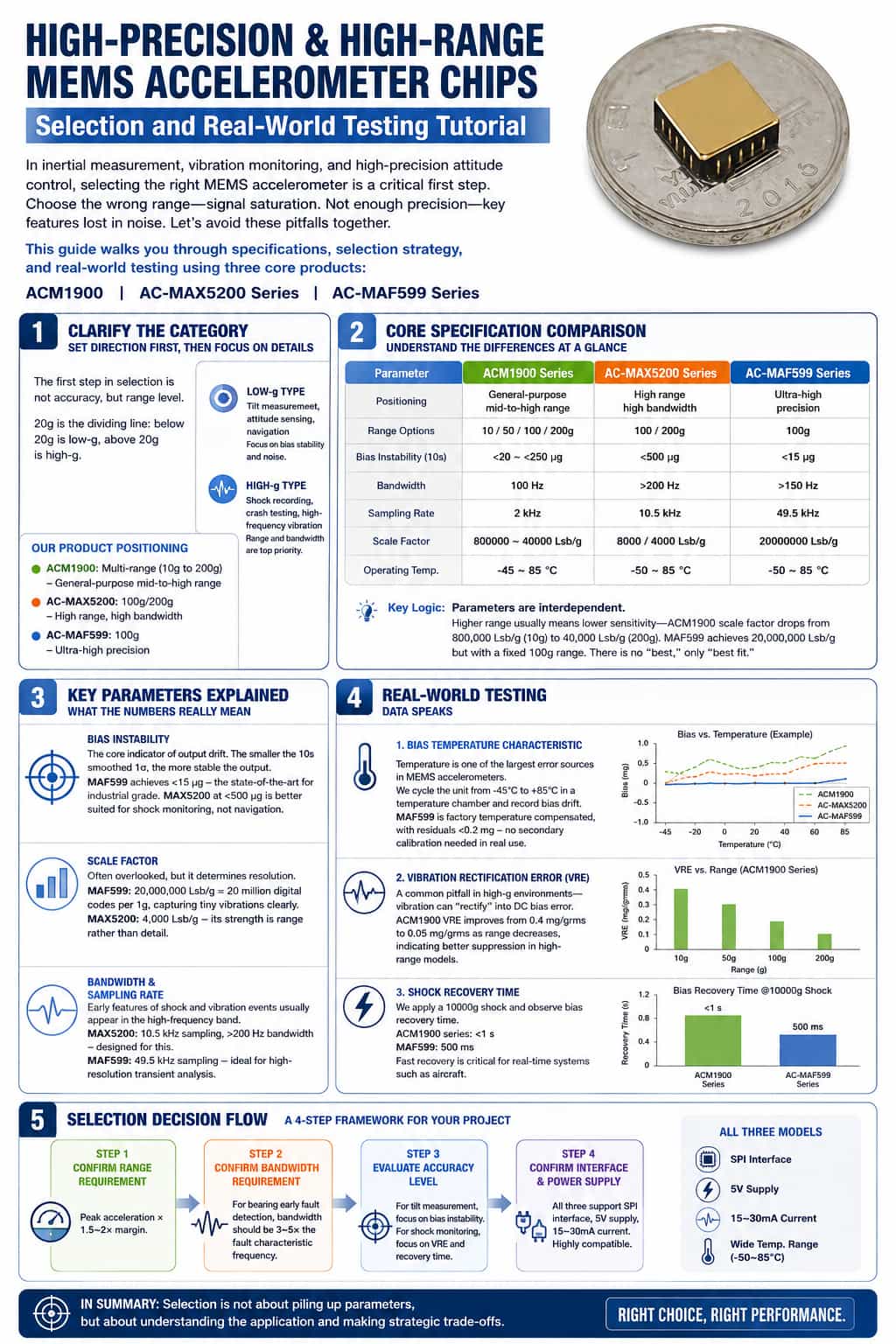
介绍: 在惯性测量、振动监测和高精度姿态控制等应用中,选择合适的MEMS加速度计往往是决定系统成败的关键步骤。量程过低会导致信号饱和和削波;精度不足则会导致关键特征被噪声掩盖——这些都是许多工程师都曾遇到的陷阱。 今天,我们将以ACM1900、AC-MAX5200系列和AC-MAF599系列这三款核心产品为例,引导您理解关键的数据手册规格,并带您完成从选型到实际测试的整个过程。这不仅仅是一堂关于元件选型的课程,更是一套可重复使用的技术方法。 第一部分:明确分类——在深入细节之前先确定方向 选择的第一步不是看精度,而是看测量范围等级。MEMS加速度计通常以20g为阈值进行分类:低于此值的称为“低g”,高于此值的称为“高g”。 低重力型:用于倾斜检测、姿态感知和导航——其中偏差稳定性和噪声性能是关键测试。高 g 型:用于冲击记录、碰撞测试和高频振动监测——其中范围和带宽是首要考虑因素。 将此与我们今天讨论的三部剧集联系起来:· ACM1900:涵盖 10 克至 200 克的多个量程;适用于中高量程的通用型号。· AC-MAX5200:100g/200g 量程;量程高、带宽大,适用于冲击和振动监测。· AC-MAF599:量程100g;超高精度,适用于惯性导航和姿态控制。 明确这一定位可以确保后续的甄选过程朝着正确的方向发展。 第二部分:核心规格对比——一目了然的差异 接下来,我们将进入核心技术细节:对这三个产品系列的规格进行比较。 规格ACM1900系列AC-MAX5200系列AC-MAF599方向通用型,中高射程高范围、高带宽超高精度型范围选项10/50/100/200克100/200克100克偏差稳定性(10秒)
阅读更多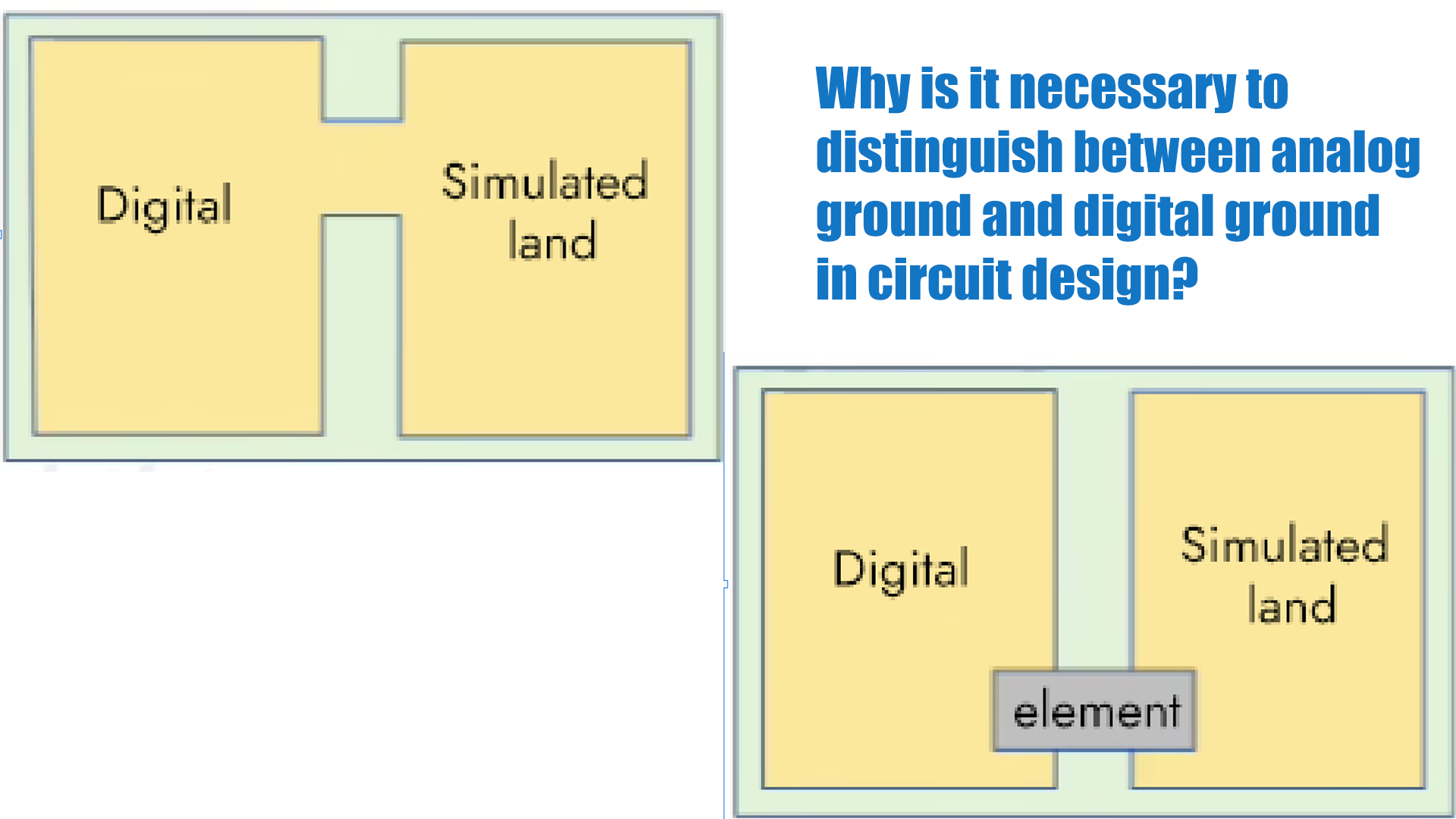
我们通常设计的传感器单元电路包含数字信号处理电路(例如微控制器)和模拟电路(包括前端传感器及其信号放大器)。简而言之,数字地是数字电路的公共参考端,即数字电压信号的参考端;模拟地是模拟电路的公共参考端,即模拟信号的电压参考端(零电位点)。 由于数字信号通常是谐波较多的矩形波,如果电路板上的数字地和模拟地在连接点处没有分开,数字信号中的谐波很容易干扰模拟信号的波形。当模拟信号是高频或高压信号时,也会影响数字电路的正常工作。模拟电路处理的是微弱信号,而数字电路的阈值更高,因此其电源要求低于模拟电路。在同时包含数字电路和模拟电路的系统中,数字电路产生的噪声会影响模拟电路,降低其小信号性能。为了保证信号完整性并避免相互干扰,必须将模拟地和数字地分开。 在原理图设计中,数字区域的接地层标记为DGND,模拟区域的接地层标记为AGND。然后在PCB设计中,接地层被划分为数字地和模拟地,两者之间保持较大的距离。数字地和模拟地应在同一点接地,可以直接接地,也可以通过元件隔离接地。 1. 直接连接。如图 1 所示,两个元件通过宽铜箔在一点连接。这种方法适用于低频系统或对噪声不敏感的系统。2. 元件隔离连接。如图 2 所示,这种连接方式使用铁氧体磁珠或 0 欧姆电阻来连接元件。这是一种主要的连接方式。铁氧体磁珠的等效电路类似于带阻陷波滤波器,仅抑制特定频率的噪声。如果噪声的频率范围已知,则铁氧体磁珠是最佳选择。0 欧姆电阻可以作为一条非常窄的电流路径,有效地限制回路电流并抑制噪声。电阻器在所有频段都具有衰减作用(即使是 0 欧姆电阻也具有阻抗),因此当噪声频率范围不确定时,0 欧姆电阻是最佳选择。
阅读更多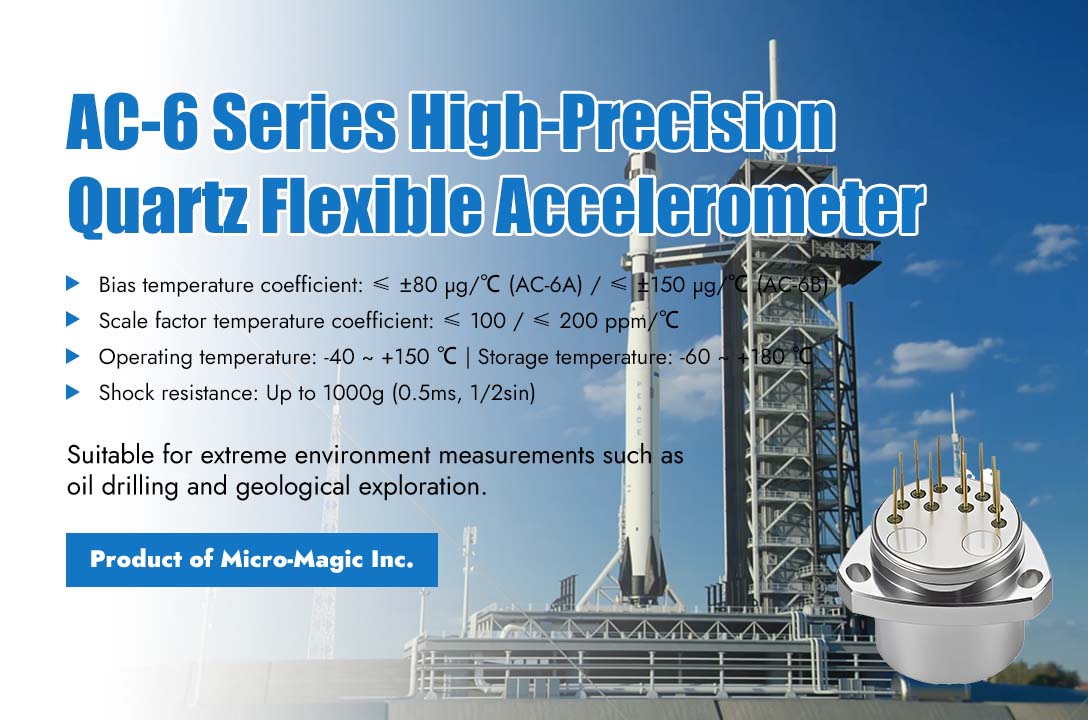
Compared with traditional accelerometers, quartz flexible accelerometers have higher accuracy and reliability. Its high precision can be reflected in the accuracy of data, while its reliability can be reflected in the stability and lifespan of equipment operation. In addition, due to the insensitivity of quartz crystals to temperature and time changes, quartz accelerometers are also more capable of ensuring long-term and stable operation than other accelerometers. Quartz flexible accelerometers have become core sensors in aerospace, defense, industrial monitoring, and other fields due to their ultra-high precision, strong impact resistance, and extreme environmental adaptability. Aerospace and Space Exploration In spacecraft docking missions, quartz accelerometers are used to detect μg (microgravity) level acceleration, providing real-time velocity increment and attitude adjustment data to ensure docking accuracy. When the spacecraft returns to the atmosphere, it needs to withstand a high overload of 3-5g while maintaining measurement stability. When used for satellite attitude adjustment and rocket launch monitoring tasks, quartz flexible accelerometers can achieve an accuracy of 60 μg with zero bias repeatability and withstand 1000g instantaneous impact (such as rocket separation). Meanwhile, the quartz flexible accelerometer can provide gravity field data for the lander, supporting precise soft landing. In space microgravity experiments, quartz flexible accelerometers are used to measure the six degree of freedom motion of loads, with an accuracy of "observing hair falling to the ground" level to eliminate vibration interference. National Defense and Military Equipment The inertial navigation system of long-range ballistic missiles and tactical missiles relies on quartz accelerometers to maintain scale factor stability (<30ppm) in impact environments of 500-1000g, ensuring ballistic accuracy. For example, it needs to withstand 100g/5ms half sine wave impact, which is suitable for high overload at the moment of missile launch. In the application of armored vehicles and drones, the stability control of tanks and armored vehicles needs to continuously output reliable data in a vibration environment (20-2000Hz random vibration). The drone navigation system utilizes the low-power (<480mW) and lightweight (<65g) characteristics of quartz flexible accelerometers to extend range and enhance maneuverability. Industrial and Infrastructure Safety Monitoring Quartz accelerometers are applied in monitoring landslides and debris flows, capturing surface micro deformations with a resolution of μg to achieve early geological hazard warning. In deformation monitoring of bridges and high-speed railways, quartz flexible accelerometers can provide long-term stability (monthly drift<50 μg) and reduce maintenance costs. In the field of energy exploration, oil drilling measurement systems (such as wireless inclinometers) rely on their high temperature resistance (185℃) to provide inclination data in high-pressure impact environments underground. Unique Advantages Support High Demand Scenarios The core advantages of quartz flexible accelerometers lie in their ultra-high accuracy and long-term stability, with scale factor drift reaching ppm level and zero bias stability reaching μg/√h level. Taking the AC-3 series quartz flexible accelerometer produced by Micro-Magic Inc as an example: Parameters AC-3A AC-3B AC-3C Unit Threshold /Resolution 5 5 5 μg Bias drift (1σ, one month) ≤15 ≤50 ≤50 μg Repeatability of scale factor (1σ, one month) ≤15 ≤50 ≤50 ppm Bias thermal coefficient ≤ ±15 ≤ ±50 ≤ ±50 μg/℃ Scale factor thermal coefficient ≤ ±15 ≤ ±80 ≤ ±50 ppm/℃ Quartz flexible accelerometers have excellent impact resistance. Its high hardness fused silica integrated structure and frictionless flexible design enable it to withstand 1000g/0.5ms half sine impact, which is far superior to ordinary MEMS sensors. Taking the AC-4 series products produced by Micro-Magic Inc as an example: Parameters AC-4A AC-4B AC-4C Unit Shock 500g 1000g 1000g 0.5ms, 1/2sin Vibration peak sin (@30~500Hz) 25 25 25 g Quartz flexible accelerometers exhibit excellent environmental adaptability over a wide temperature range, such as . The extremely low thermal expansion coefficient and symmetrical structure of quartz material result in minimal temperature drift (as low as ppm/° C), making it a reliable choice for high-precision measurement in extreme temperature environments such as aerospace and military. Taking the AC-6 series products produced by Micro-Magic Inc as an example: Parameters AC-6A AC-6B Unit Bias thermal coefficient ≤ ±80 ≤ ±150 μg/℃ Scale factor thermal coefficient ≤100 ≤200 ppm/℃ Temperature range (Operating) -40 ~ +150 -40 ~ +150 ℃ Temperature range (Saved) -60 ~ +180 -60 ~ +180 ℃ Conclusion With its excellent precision, outstanding long-term stability, and outstanding resistance to extreme environments, quartz flexible accelerometers have firmly established their position as the core device for precise monitoring in the aerospace and military industry. It plays an irreplaceable key role in high-precision inertial navigation, aircraft attitude control, and various precision measurement tasks.
阅读更多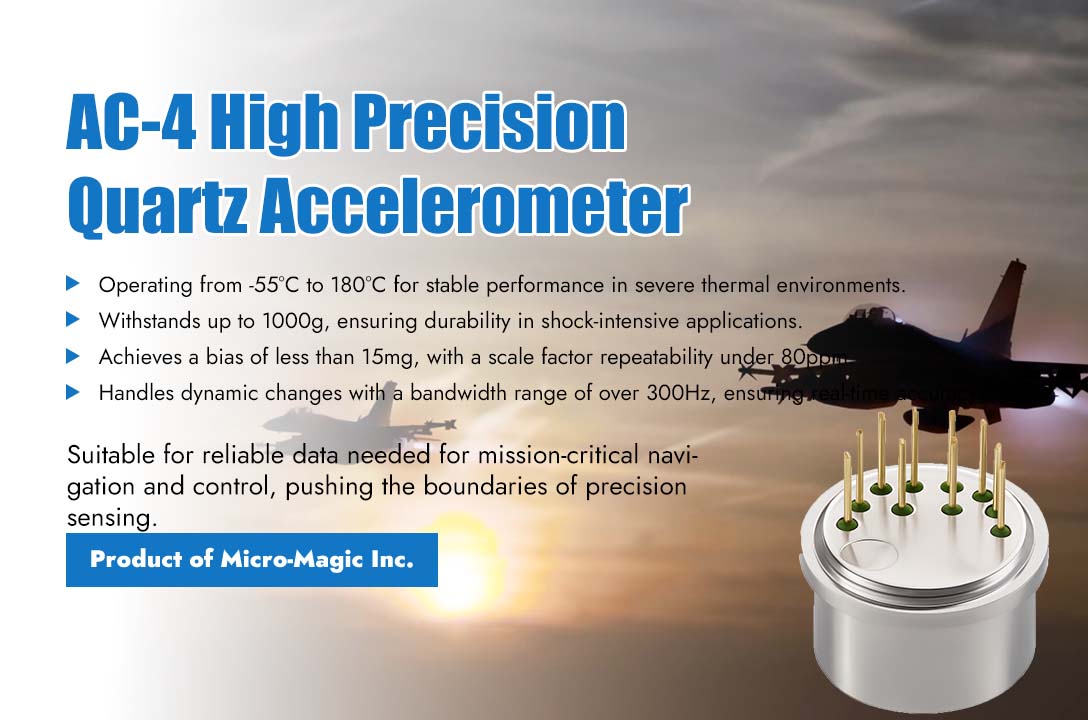
Micro-Magic 公司近日宣布,其定制的 AC-4 系列石英柔性加速度计已成功应用于某型高速飞行器的导航控制系统,解决了在严苛的气动加热和复杂振动环境下进行精确惯性测量的问题。 高速飞行时,此类飞机的外壳表面会因强烈的空气动力摩擦而持续高温。同时,复杂的飞行姿态和发动机运转也会带来强烈的振动和冲击。在这种“热-振动复合”的极端环境下,普通惯性传感器容易出现性能下降甚至失效,导致导航信号“失锁”。这是整个系统研发的关键技术瓶颈之一。 AC-4系列加速度计的设计正是为了应对这一挑战。该产品采用独特的高温设计和双扭矩结构,确保在-55°C至180°C的严苛温度范围内性能稳定。其高达1000g的抗机械冲击能力和出色的振动校正误差(
阅读更多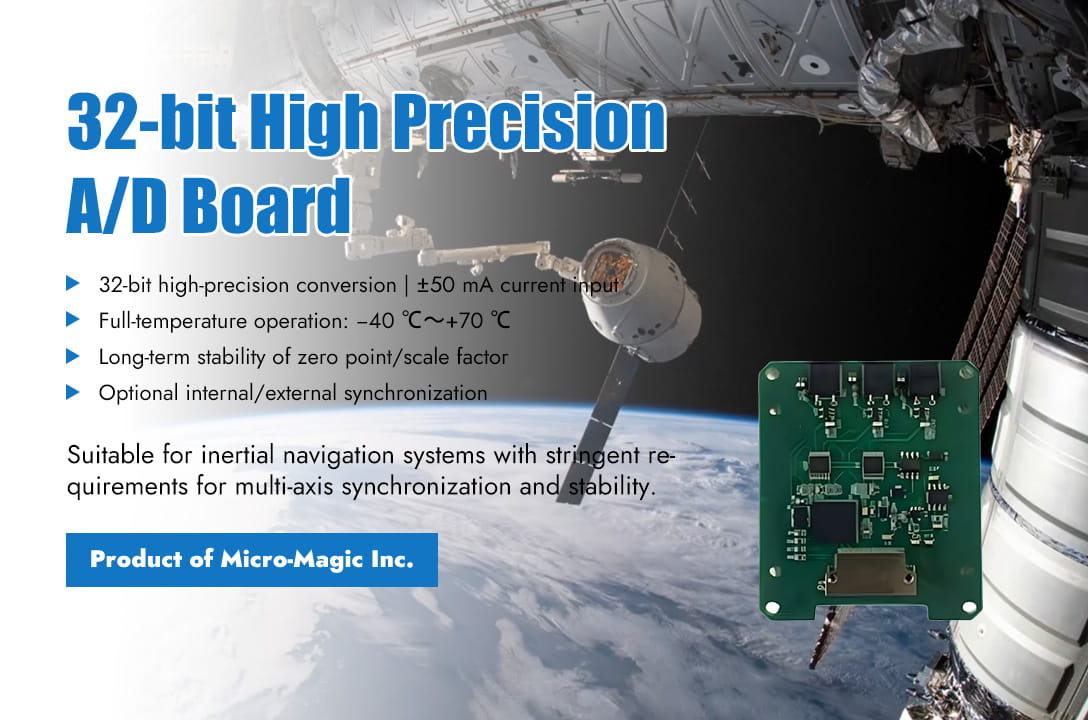
在惯性导航、航空航天和精密工业测量等领域,高精度、高同步的物理信号采集是确保系统性能的核心。Micro-Magic公司推出的专为加速度计设计的32位高精度A/D转换电路,是此类高端应用的关键组件。凭借其卓越的性能和灵活的架构,它为构建可靠的高精度惯性导航信号采集系统奠定了坚实的基础。 这款A/D转换板的核心优势在于其极高的测量精度和稳定性。它支持±50mA的电流输入范围,并具备32位A/D转换能力,能够精确捕捉加速度计输出的微小电流变化。在-40℃至+70℃的整个工作温度范围内,其零点温度系数优于±2nA/℃,比例因子温度系数低于3.0ppm/℃。这意味着即使在复杂的环境温度波动下,系统也能保持极低的测量漂移,从而确保导航解决方案的长期精度。此外,该产品还拥有超高的稳定性,零点稳定性和比例因子稳定性分别达到nA级和ppm级,在有效降低系统噪声的同时,保证了数据的可重复性和可靠性。 惯性导航系统需要极其严格的多轴数据同步。这款A/D转换板提供了一种精确的同步解决方案,以确保数据的时空一致性:内部/外部同步模式:可根据系统指令灵活切换。在内部同步模式下,电路板自主生成采样时钟;在外部同步模式下,接收来自导航计算机的RS422差分同步信号,实现全系统统一采样时间,完美消除通道间时序误差。 ⚪锁存和触发:在同步信号的下降沿锁存所有通道的 A/D 值,确保 X、Y 和 Z 轴的加速度和温度数据在同一时刻被捕获,为后续导航算法提供时空一致的数据源。惯性导航系统需要极其严格的多轴数据同步。这款A/D转换板提供了一种精确的同步解决方案,以确保数据的时空一致性:⚪ 内部/外部同步模式:可根据系统指令灵活切换。在内部同步模式下,电路板自主生成采样时钟;在外部同步模式下,接收来自导航计算机的RS422差分同步信号,实现全系统统一采样时间,完美消除通道间时序误差。⚪ 锁存和触发:在同步信号的下降沿锁存所有通道的 A/D 值,确保 X、Y 和 Z 轴的加速度和温度数据在同一时刻被捕获,为后续导航算法提供时空一致的数据源。
阅读更多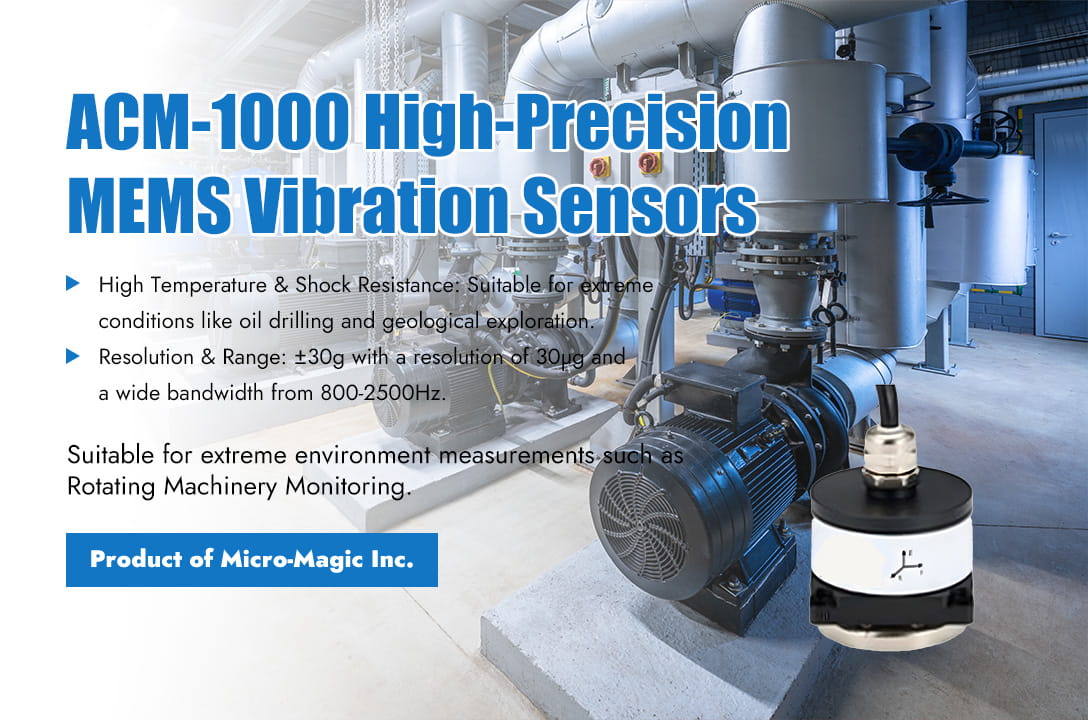
工业设备的振动检测已成为预测性维护的核心组成部分。振动信号的变化可以反映潜在的故障,例如轴承磨损、齿轮啮合异常和转子不平衡。微机电系统(MEMS)传感器具有小型化、高灵敏度和低成本等优势,正逐步取代传统的压电传感器,成为振动检测的主流技术。以下将介绍MEMS传感器在工业设备振动检测中的主要应用和技术特点。 1. 主要应用场景 (1) 工业设备中旋转机械的监测对于电机、泵、风机、压缩机、齿轮箱、发电机和涡轮机等工业设备,MEMS振动传感器可以检测旋转部件中质量分布不均引起的振动,以及联轴器处轴中心线不对中(包括平行不对中和角度不对中)引起的振动。对于轴承故障,MEMS振动传感器可以检测滚动轴承或滑动轴承的早期损伤(例如点蚀、剥落、裂纹和磨损)。(2) 状态监测和预测性维护MEMS振动传感器尺寸小、功耗低,非常适合安装在关键设备上,用于连续采集振动数据并实现在线状态监测。通过分析振动信号的趋势变化、频谱特性(例如故障特征频率)、包络分析等,可以对设备故障进行早期预警。(3) 冲击和瞬态事件检测MEMS加速度计具有宽带响应(直流响应)特性,可以检测冲击、碰撞以及阀门开启和关闭引起的瞬态振动等事件,这些事件可能会损坏设备或指示潜在问题。2. MEMS传感器的技术优势(与传统压电振动传感器相比) MEMS传感器的超低成本是推动其大规模部署的最关键因素。其价格远低于传统的工业级振动传感器,因此在单个设备或多个测量点上部署大量传感器在经济上是可行的。MEMS传感器极低的功耗使其非常适合电池供电的无线传感器网络应用,从而实现长期免维护运行。MEMS传感器尺寸小、重量轻,对被测物体几乎没有负载效应(质量效应)。它们采用多种灵活的安装方式,例如键合和磁吸,使其特别适用于小型设备或空间受限的场景。 3. 潜在挑战和关键预防措施 MEMS传感器的高频响应限制是其在振动检测领域的主要局限。传统的压电传感器可以轻松覆盖10kHz甚至更高的频率范围(例如40kHz),而工业级MEMS传感器的响应通常在3kHz-10kHz范围内较为平坦。这削弱了其对超高速轴承(故障特征频率可能很高)或齿轮啮合高频部件早期故障的检测能力,因此需要根据被测设备的特征频率范围仔细选择传感器型号。此外,标准的消费级或工业级MEMS传感器通常工作温度范围为-40℃至+85℃或+105℃。对于某些工业环境(例如发动机、涡轮机附近),可能需要使用耐高温的专用MEMS传感器(最高可达+125℃甚至更高)或采取绝缘措施。压电传感器通常具有更宽的温度选择范围。4. MEMS振动传感器产品 由Micro-Magic公司生产的ACM-1000型MEMS振动传感器,按照工业标准设计,采用数字滤波技术,有效降低测量噪声,提高测量精度。适用于振动测试、冲击测试、震动测试等多个领域。 ACM-1000可直接输出被测物体的三轴振动速度、角度、振幅(位移)、频率和温度,并判断被测物体(桥梁、风扇、旋转机械轴承振动测量和实时监测)是否损坏,方便用户进行数据分析。例如,振动传感器可提前检测由轴系故障(叶片磨损、动不平衡、对中不良)、轴承故障(轴承损坏、润滑不良、轴承碰撞、轴承松动)、传动故障(齿轮磨损、皮带磨损、联轴器磨损、齿轮点蚀和剥落)等引起的机器故障,并发出警报,防止机器在不利条件下继续运行造成损坏。ACM-1000 性能指标 范围物品ACM-1000测量轴 X、Y、Z(选修的) 准确性振动速度1毫米/秒振动角0.001°/秒振幅0.001毫米振动频率1赫兹温度补偿-40 ~ +85℃范围振动速度(0-50毫米/秒),振动角(0 ~ 180°)振幅(位移 30 毫米),振动频率(1~100Hz)带宽(3DB)500赫兹 此外,Micro-Magic Inc. 还根据不同的应用场景推出了 ACM-100、ACM-200 和 ACM-300 系列高精度加速度计产品,适用于振动测试、冲击测试、疲劳监测和预测等多个工业领域,方便客户根据不同的应用场景进行灵活配置。 结论 MEMS传感器凭借其颠覆性的成本优势、低功耗、小尺寸和易于数字化集成等优点,正在革新工业设备振动检测领域。它极大地降低了状态监测和预测性维护的门槛,使得在更广泛的设备和更多的测量点上进行连续监测成为可能,尤其是在中低频振动分析(例如不平衡、不对中、轴承早期失效、松动等)和构建大规模无线监测网络方面。ACM-100ACM-300ACM-1000
阅读更多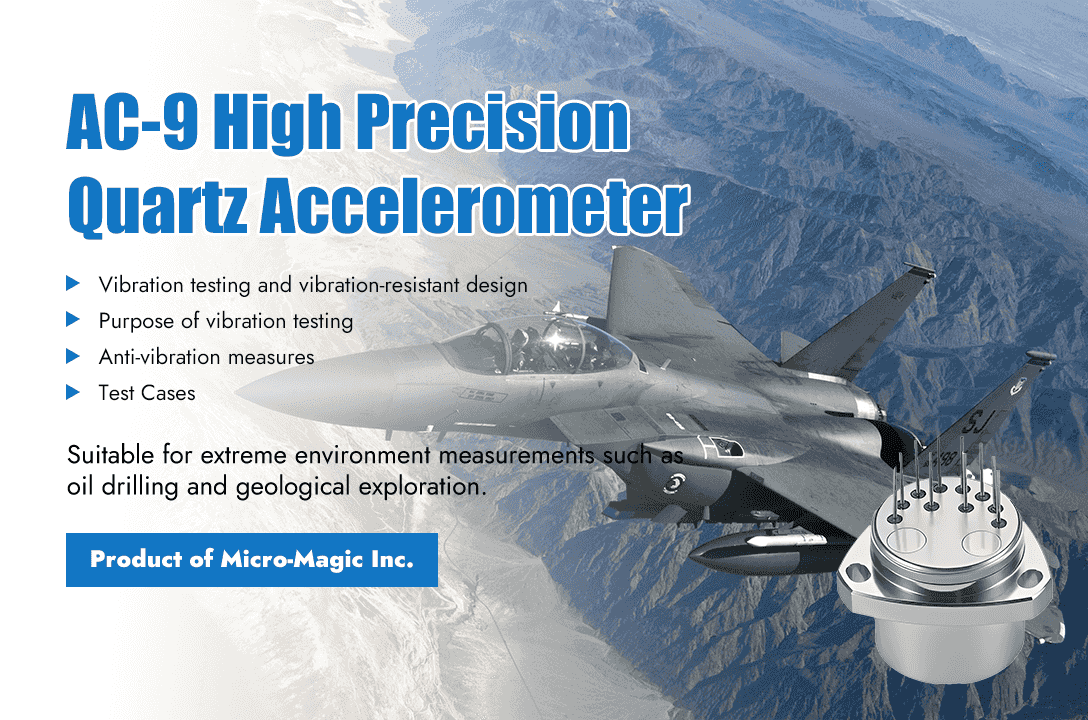
Quartz flexible accelerometers are widely used in aerospace, inertial navigation, precision measurement and other fields due to their advantages of high precision and stability. However, its core sensitive component - quartz flexible pendulum - is very fragile and extremely sensitive to vibration environments. Vibration may cause performance degradation, zero shift, and even structural damage. Therefore, strict vibration testing and effective anti vibration measures are crucial. Purpose of Vibration Testing The purpose of vibration testing is to evaluate the performance, structural integrity, and reliability of accelerometers in actual or expected vibration environments. The main types of testing include sine vibration testing and random vibration testing. Sine vibration testing is to find the resonant frequency of the structure and evaluate its response and tolerance at specific frequencies. Typically, within the specified frequency range (e.g., 5 Hz – 2000 Hz or higher, according to the specification), a linear or logarithmic sweep is performed along three mutually perpendicular axes. Frequencies exhibiting an abnormal increase in accelerometer output (response amplification) are recorded. Special attention should be paid to the first-order and second-order flexural resonant frequencies of the quartz flexure, as these frequencies are most prone to damage. The relationship between the input vibration and output signal is analyzed. Perform fixed frequency vibration for a specified duration (such as several minutes) on the identified resonant frequency points (especially the pendulum resonance points) to test their fatigue life and stability. Random vibration testing is to simulate wideband, random vibration excitations in actual environments (such as rocket launches, engine noise, aerodynamic turbulence, vehicle driving), and evaluate their comprehensive performance under statistically distributed vibrations. Apply vibrations with specific power spectral density patterns along three mutually perpendicular axes within the specified frequency range. The scale of testing is usually higher than that of sine testing, which can better reflect the real environment. PSD spectra and Grms values are developed based on specifications or measured data. The key monitoring parameters in the test include output signals, physical status, and performance verification. The output signal mainly observes zero offset, scale factor changes, increased noise levels, abnormal outputs (saturation, oscillation), etc; The physical state mainly involves checking whether the accelerometer has any abnormal noise, whether the structure is loose, and whether there is any damage to the appearance (after testing, the cover needs to be opened to check the swing plate); Performance validation mainly involves comprehensive static performance testing of accelerometers before, during, and after vibration (zero bias, scale factor, second-order nonlinearity, threshold, resolution, repeatability, etc.), comparing the effects of vibration. Vibration Mitigation Measures To address the vulnerability of quartz flexure accelerometers, vibration resistance measures must be implemented at multiple levels. (1) Core sensitive structure design and process Firstly, it is necessary to optimize the design of the oscillating plate. While meeting the requirements of sensitivity and bandwidth, the thickness of the oscillating plate should be appropriately increased (balancing sensitivity), the shape and support structure should be optimized, and the lowest order resonant frequency should be maximized to be higher than the expected main vibration environment frequency (ideally higher than twice). Avoid resonance frequencies falling in the main vibration energy concentration zone. Secondly, it is precision manufacturing and assembly, strictly controlling the machining accuracy and symmetry of key components such as swing plates, torque converter coils, differential capacitor plates, etc., to ensure uniform stress distribution and reduce internal stress concentration points. Reliable processes such as laser welding are used to connect the swing plates to the base. Finally, the selection of materials should be based on high-strength and high stability quartz materials, and the stiffness and damping characteristics of the base and shell materials should also be considered. (2) Internal mechanical isolation and damping Firstly, apply a small amount of special damping adhesive (such as silicone rubber base) on the non sensitive area of the swing plate or the supporting beam. This is one of the most commonly used and effective measures, which can significantly reduce the resonance Q value and decrease the resonance amplification factor. However, extreme caution should be taken to avoid affecting sensor performance (such as introducing thermal stress, affecting symmetry, and increasing mass). Secondly, a micro isolation system (such as low stiffness, high damping rubber pads, metal rubber, micro wire rope isolators, etc.) should be designed between the core of accelerometer (including the core components of the swing plate assembly) and the housing base to isolate the transmission of high-frequency vibrations to the sensitive core. The stiffness, damping, and load-bearing capacity need to be carefully designed. (3) Sealing and Filling Encapsulating silicon gel or silicone rubber with low modulus and high damping in the inner cavity of the accelerometer (usually between the core and the shell) is another very effective anti vibration measure (especially anti shock and high-frequency vibration). Silicon gel or silicone rubber provides damping and absorbs vibration energy; Support internal structure and suppress relative motion; Protect internal components from contamination and moisture. The sealing adhesive needs to have extremely low shrinkage stress, excellent thermal stability, good adhesion, low air release, and low permeability (especially for space applications). The sealing process (excluding bubbles and curing) is crucial, as poor sealing can actually introduce stress or contamination. (4) External installation and system level vibration isolation Optimize the installation interface to ensure that the installation base is flat and rigid. Tighten the connecting bolts evenly to the specified torque to avoid introducing local stress or reducing overall stiffness due to improper installation. At the same time, install appropriate external shock absorbers between the accelerometer and vibration sources such as engine mounts and aircraft structures. Select the type of isolator (such as metal rubber isolator, wire rope isolator, viscoelastic damping isolator) based on the characteristics of the main vibration frequency, and its natural frequency should be much lower (usually <1/√ 2 times) than the lowest main vibration frequency that needs to be isolated. The load-bearing capacity of the isolator, environmental adaptability (temperature, vacuum), and the impact on the low-frequency performance of the sensor also need to be considered. Test cases Taking the AC-9 series high-precision quartz accelerometer produced by Micro-Magic Inc as an example, the influence of vibration environment on the K0 index of the accelerometer is tested. Before vibration, the quartz accelerometer is in a 0g state, the product is powered on, data is collected for 1 minute, and take the average of the data, denoted as ; Start the vibration table under the following vibration conditions: 6g, random vibration at 200~2000Hz, wait for the vibration table to stabilize, collect data for 1 minute, and take the average of the data, denoted as ; Rotating vibration fixture, quartz accelerometer in 0g state, then power on the product, collect data for 1 minute, and take the average of the data, denoted as . By calculation, it can be concluded that: Conclusion The vibration problem of quartz flexible accelerometers is a system engineering issue that needs to be addressed throughout the entire process of design, manufacturing, testing, and application. When selecting and designing anti vibration measures, careful trade-offs must be made to ensure that the core performance indicators of the accelerometer are not significantly sacrificed while improving the anti vibration capability, and other environmental adaptability requirements are met. AC-9
阅读更多
在精密测量和控制领域,高精度电流/频率转换技术至关重要。Micro-Magic公司推出的AVI-F系列I/F转换模块已成为高性能惯性导航系统加速度计数据采集、弱电流信号数字采集等领域的理想选择。由于其优异的性能和稳定的性能,可满足高需求场景的需求。 AVI-F由电压基准、恒流源、积分器、积分臂、逻辑控制CPLD等组成。加速度计的电流信号可直接转换为脉冲频率,是一款高精度、高分辨率的模数转换器。AVI-F采用电荷平衡积分原理,具有信号无损采集、受电源等噪声干扰小的特点,是构建高性能惯性导航系统的理想电路。 AVI-F系列产品的核心优势是什么? 1. 高精度和高稳定性 AVI-F系列模块采用电荷积分法,最大输出频率可达256kHz,零点偏移低至10nA,综合非线性误差仅为20ppm,确保信号转换的高精度和高可靠性。其比例因子温度系数低至1ppm/℃,且在整个温度范围内均表现出良好的稳定性,适用于-45℃至70℃的严苛环境。 2.高标准硬件设计 电路板上采用高性能元器件,主要为表面贴装器件(SMD),这些器件尺寸小、精度高。电路板级采用精密恒流源和高精度万用表进行精确校准,包括对称性和线性度校准。 3.多功能输出接口 该模块支持三个独立的脉冲输出(X/Y/Z通道),每个通道包含正负电流脉冲信号。同时,还增加了一个RS422串口功能,以1kHz的频率发送脉冲累加信号,从而简化数据采集过程,提高系统集成效率。 4.低功耗和本地化设计 电源要求为±15V和+5V,稳态电流低至0.2A,功耗性能优异。所有元器件均100%国产,确保供应链安全,满足自主可控的需求。 AVI-F系列产品的典型应用 a. 惯性导航系统:精确转换加速度计信号以提高导航精度。b. 工业自动化:实时监测电流信号并优化控制过程。c. 研究仪器:高分辨率数据采集,用于辅助精密实验。 为什么选择AVI-F模块? AVI-F系列I/F转换模块集高精度、低功耗和多功能性于一体,是追求性能和可靠性用户的明智之选。无论是在严苛环境还是复杂应用中,它都能提供稳定高效的解决方案。 AVI-F无论您需要什么,Micro-Magic 都会在您身边。
阅读更多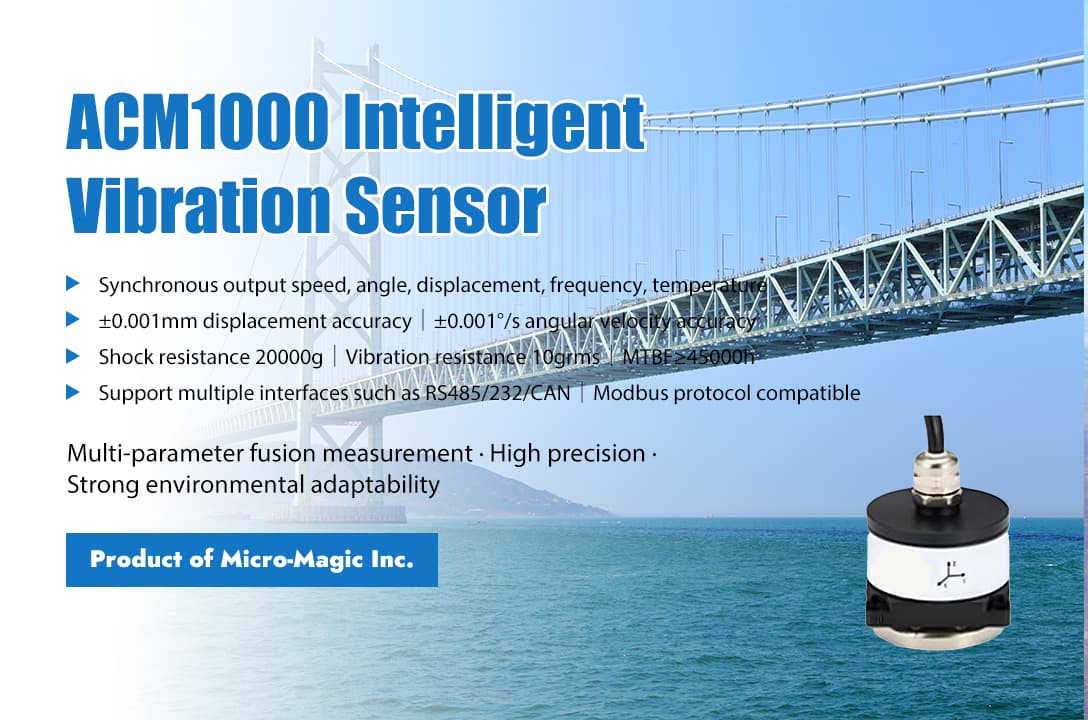
一分钟内快速获取产品信息 在工业自动化和智能监控领域,准确的数据采集和可靠的设备状态分析是保障生产安全高效的关键。 ACM1000 数字的 MEMS振动传感器 由……推出 杭州麦新敏微科技有限责任公司由于其高精度、多参数输出和较强的环境适应性,已成为振动监测领域的理想选择。 ACM1000采用低噪声、低漂移、低功耗的三轴MEMS传感器,具有高频低噪声特性,尤其适用于高分辨率振动测量应用。在设备状态监测应用中,它能够尽早检测到机器故障。该产品不仅性能卓越,而且功耗极低。此外,即使在高冲击和高振动环境下,该传感器也能提供准确可靠的倾斜测量,而不会出现传感器饱和现象。 ACM1000产品的亮点包括以下几个方面:1.多参数综合测量ACM1000 可同时输出三个轴(X、Y、Z)的振动速度(0-50mm/s)、振动角度(0-180°)、振幅(位移0-30mm)、振动频率(1-100Hz)和温度数据,全面满足设备振动状态的监测要求。2.高精度和低噪音采用数字滤波技术和单晶硅电容式传感器,有效降低了噪声干扰,测量精度达到:振动速度:±1mm/s;振动角度:±0.001°/s;振动位移:±0.001mm。3.工业级耐用设计宽广的工作温度范围(-40℃~+85℃),适用于极端环境。可承受20000g冲击和10g振动,满足严苛工业场景的要求。平均故障间隔时间≥45000小时,确保系统稳定可靠运行。4.配置灵活,易于集成支持RS232/RS485/TTL/RS422/CAN等多种接口,兼容Modbus协议。可设置地址码(0x01~0xFF),支持多传感器组网,实现多点监测。内置磁性底座和螺丝安装孔,方便部署。 精准监测每一次振动,防患于未然,助力提升工业智能水平。选择 ACM1000 为您的设备配备“智能眼”! ACM-1000无论您需要什么,Micro-Magic 都会在您身边。 --
阅读更多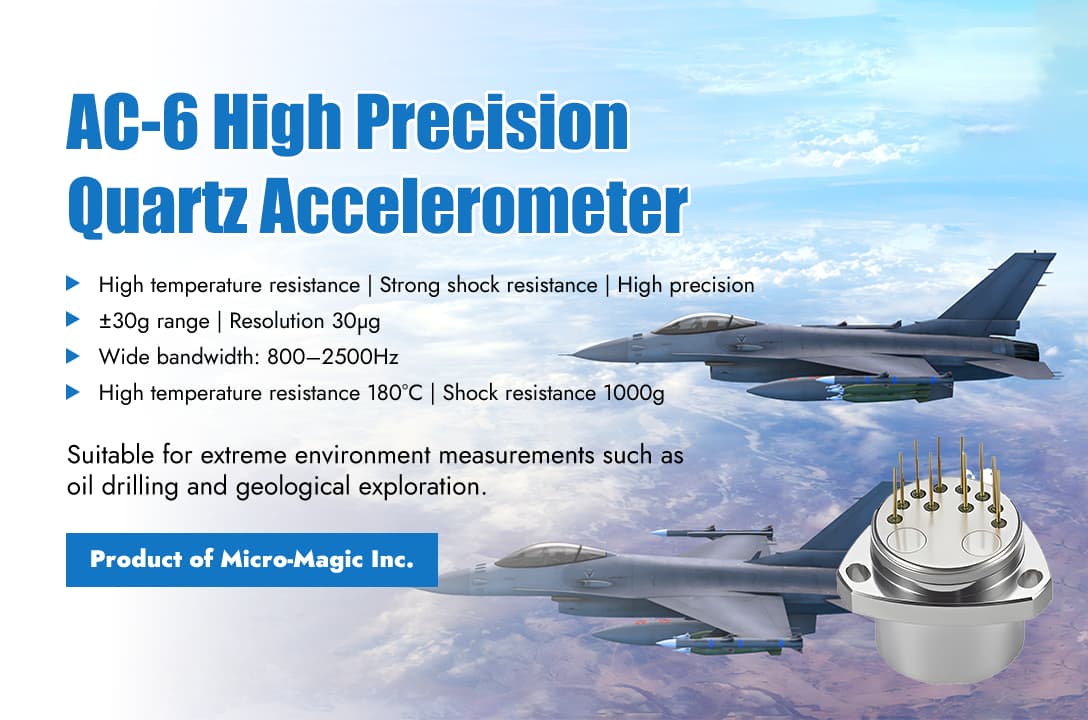
在那些对精度、可靠性和耐高温、抗振动环境适应性要求极高的行业中, AC-6 系列高性能 石英柔性加速度计从 杭州麦新敏微科技有限责任公司 毫无疑问,这是一款颠覆性产品。这款先进的加速度计专为应对最具挑战性的高温和抗振环境而设计,凭借其无与伦比的精度和稳定性,是石油天然气钻探、地球物理勘探等领域的理想之选。AC-6石英柔性加速度计产品采用独特的微型化、耐高温抗振设计、先进的封装技术和专用电路。用户可通过计算选择合适的采样电阻,实现高精度输出。此外,根据用户需求,产品还内置温度传感器,用于补偿局部温度和比例因子,从而降低环境温度的影响。 AC-6 如何解决高温环境下的稳定性和可靠性问题?为了解决加速度计探头在高温下工作寿命短的问题,改进了连接工艺,采用金线键合将端子柱连接到石英摆上的镀金膜上。该伺服电路采用多芯片模块厚膜混合集成电路工艺。基板采用氧化铝陶瓷,导体采用金属金,解决了高温下长期稳定性问题,且误差较小。在测试阶段,为了满足石油测井的高温工作环境,加速度计在 180°C 下进行了 96 小时以上的高温老化,以确保高温运行期间的长期稳定性。 AC-6 还具有以下显著特点:Ø静态和动态测试均可实现高精度测量,偏差稳定性(1σ,一个月)≤150μg,分辨率低至30μg。Ø测量范围可达±30g,满足极端环境下的加速度测量需求。带宽为800~2500Hz,适用于高频动态测量场景。Ø抗振动能力达到 25G(20~2000Hz),抗冲击能力达到 1000g(0.5ms 半正弦波),确保在恶劣条件下稳定运行。 这 AC-6 石英加速度计 AC-6凭借其高精度、高可靠性以及对高温和恶劣环境的出色适应性,已成为工业测量领域的标杆产品。其成熟的技术和广泛的应用验证了其卓越的性能。无论是极端环境下的静态测试还是高频动态测试,AC-6都能为用户提供所需的测量结果。 可靠的解决方案.
阅读更多留言