
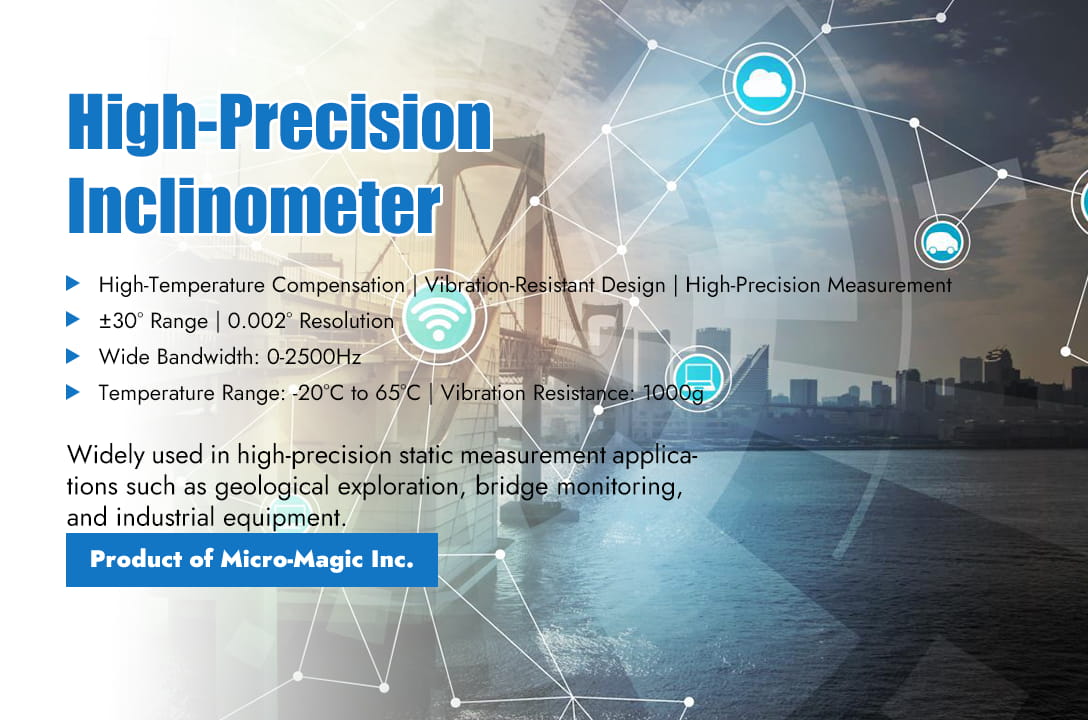
在高精度倾角测量系统的设计中,误差控制是决定系统性能的关键。本文结合现有研究成果和工程实践,从四个方面探讨了误差控制的实现方法、误差来源、分析方法和解决方案,为高精度倾角测量系统的设计和优化提供参考。反映水平面与 Y 轴之间的角度。2. 主要误差来源分析1) 环境干扰误差⚪机械振动:当传感器安装在振动环境中时,振动会导致输出信号波动,例如在车辆平台或工业设备场景中,振动可能会引入±0.5°的测量偏差。⚪ 温度漂移:温度变化会导致传感器零点漂移,特别是当工作温度超过校准范围(例如 -20℃~65℃)时,误差可达 0.002°/℃。⚪ 电磁干扰:电源波动或外部电磁场可能会干扰传感器信号链,影响模数转换的精度。2) 传感器自误差⚪ 非线性误差:MEMS倾斜传感器的输出与倾斜角度呈非线性关系,有时,非线性误差在±30°范围内可达到0.1°的偏差。⚪ 噪声和分辨率限制:模拟信号处理不当会导致有效分辨率下降,例如ADC位数不足,可能无法检测到0.175mV电平的小信号。⚪ 安装错误:底座不平整或固定不牢,导致传感器参考平面与被测表面不平行,从而产生系统性偏差。3) 动态干扰如果设备受到外部加速度(例如振动或运动)的影响,加速度计的输出将包含动态加速度分量,从而导致倾斜角计算误差。此时,需要结合陀螺仪或磁力计的数据进行融合(例如卡尔曼滤波)。3. 错误解决方案和关键技术1) 环境干扰抑制技术一个) 减振设计:使用橡胶垫隔离振动源,或选择具有动态滤波功能的传感器。b) 温度补偿:⚪硬件层面:选择内置温度传感器的 MEMS 芯片,通过实时温度采集来校正漂移。⚪ 软件层面:建立温度误差曲线拟合方程,例如使用多项式补偿算法将温度漂移精度降低到 -20~65 ℃ 时为 0.002 °。c) 电源和信号隔离:采用高稳定性参考源(如 LM236)为传感器供电,并设计了去耦电路以减少电源纹波的影响。2) 传感器信号优化技术 一个) 高精度信号链设计: ⚪ 使用低噪声运算放大器(如 ICL7653)和差分转换电路(如 AD8138AR)来提高共模抑制比和信噪比。⚪ 使用 24 位 ∑-Δ 型 ADC(例如 C8051F350 中的内置 ADC),结合 SINC3 滤波器来降低噪声,从而实现 20 位有效分辨率。b) 非线性校正:通过细分测量范围并用分段正弦曲线拟合,非线性误差从 0.11° 减小到 0.0044°。3) 安装纠错系统一个) 双传感器映射方法:通过在安装平台上将第一倾斜传感器(校准参考)与第二传感器(待校准)配合使用,建立驱动角度与测量角度之间的线性映射关系,以校正机械安装偏差。b) 水平校准:使用高精度水平仪校准安装面,确保传感器参考面与被测面平行,并用扭矩螺钉固定底座。4) 动态误差补偿算法一个) 多传感器融合:集成三轴加速度计和陀螺仪,通过卡尔曼滤波或 LSTM 算法预测动态倾斜角度,并将更新速率提高到 100Hz 以上。b) 悬链线模型优化:基于导线的动态变形,利用悬链线方程结合环境参数(风速、温度)实时调整安全阈值,将误判率降低到 0.3% 以下。4. 典型应用案例及验证1) 静态高精度测量系统基于SOC的倾角测量系统(T7000-H系列)最大绝对误差为0.005°,相对误差为
阅读更多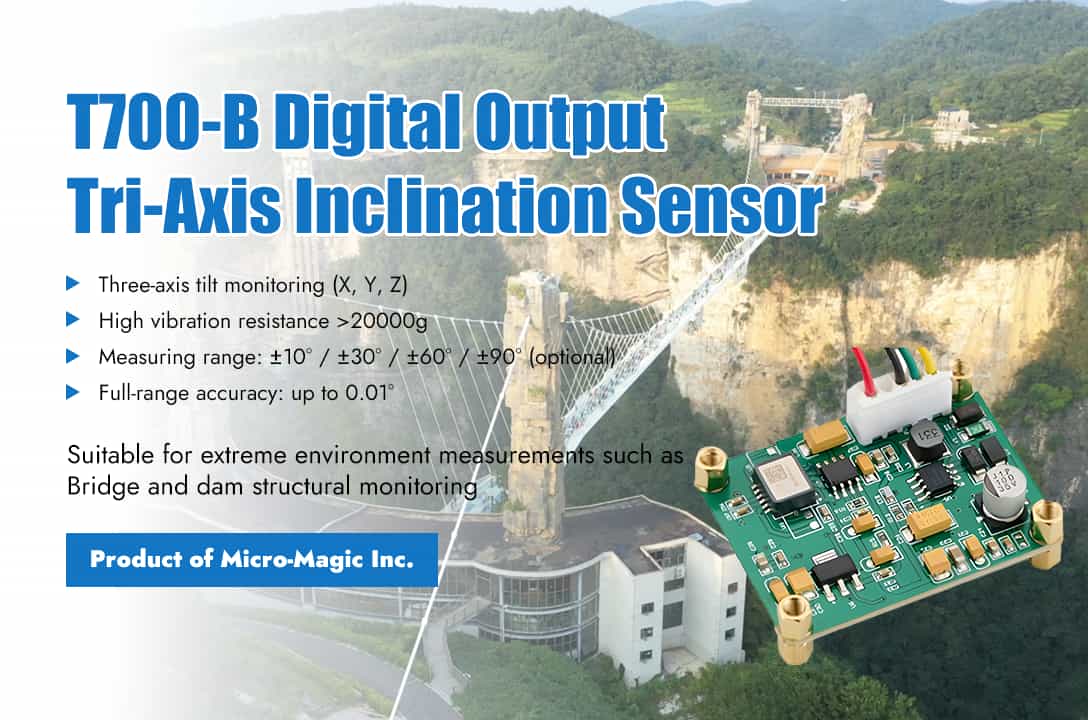
倾斜角传感器在桥梁监测中发挥着至关重要的作用,主要用于测量桥梁结构或其关键部件相对于重力方向的倾斜角变化。这些微小的变化往往是桥梁结构健康状况、荷载响应、地基沉降或潜在病害的重要指标。1. 主要应用场景→桥墩/塔架倾斜监测监测桥墩基础是否存在缓慢且不均匀的沉降,这可能导致桥墩倾斜。通过使用倾斜传感器长时间连续记录角度变化,可以提供趋势数据。在桥墩/塔架施工过程中实时监测垂直度或预设角度的变化,以确保施工精度。→ 轴承位移和旋转监测监测桥梁支座在实际荷载作用下的转角。转角的异常变化可能表明支座老化、失效或存在异常约束。通过测量支座上下板之间的相对倾角,结合支座的设计参数,可以间接计算支座的滑动位移。→ 主梁对齐和变形监测虽然直接挠度测量通常采用位移传感器或水平仪,但在特定位置(例如跨中、桥墩顶部)安装倾角仪可以监测梁截面的旋转变化。通过将这些角度测量值与梁的几何参数(例如长度)相结合,可以计算出这些位置相对于参考点的相对挠度趋势。这种方法对于长期结构健康监测 (SHM) 和大跨度桥梁尤为重要。→ 电缆塔/拱肋变形监测:该过程利用倾角仪监测斜拉桥塔或拱桥肋在荷载作用下的角度变化,评估其整体结构稳定性和变形状态。2. MEMS倾斜传感器在桥梁监测中的优势MEMS倾斜传感器尺寸小、重量轻,易于安装在结构表面或嵌入特定部件中,对结构本身的影响极小;与传统的高精度倾斜仪或光纤传感器相比,MEMS倾斜传感器成本低、单价低,使得大规模、高密度部署传感器网络在经济上可行,从而获取更全面的结构状态信息;MEMS倾斜传感器功耗低,特别适用于电池供电或能量采集的无线传感器网络,可实现长期无人值守监测;MEMS倾斜传感器易于集成和数字化,通常直接输出数字信号(例如I2C、SPI、RS485),便于与数据采集器和无线传输模块集成,构建自动化监测系统;MEMS倾斜传感器安装简便,安装过程相对简单,通常只需固定底座或磁吸即可;MEMS倾斜传感器具有强大的动态响应能力,一些高性能MEMS传感器具有足够的带宽来监测结构的动态响应(例如振动引起的倾斜变化)。应用中的关键考虑因素桥梁监测通常需要高精度(优于0.01°甚至0.001°)和稳定性。尽管MEMS技术不断进步,但其长期漂移和温度敏感性仍然是挑战,尤其是在追求高精度应用时。因此,必须仔细选择满足精度要求的传感器型号,并考虑温度补偿和定期校准策略。桥梁结构的变形通常角度变化不大(通常在几十分之一度到几度的范围内),但传感器需要在小范围内具备高分辨率和高线性度。同时,也必须考虑极端事件(例如强地震)可能产生的大角度变形。传感器需要能够承受桥梁环境中剧烈的温度变化、湿度变化、振动以及可能的电磁干扰。需要选择工业级或加固型包装产品。倾斜角测量是指传感器本体与重力方向之间的夹角。因此,传感器安装面的平整度、稳定性以及与被测结构的牢固连接至关重要。安装面上的任何轻微变形或松动都会直接影响测量结果。用例Micro-Magic Inc. 生产了一系列 MEMS 倾斜传感器,以满足各种应用场景的需求,包括 70 系列、T700 系列和 T7000 系列。所有系列产品均基于工业设计标准,涵盖单轴倾斜传感器和双轴倾斜传感器。信号输出包括数字和模拟(电流、电压)输出。测量精度涵盖中高精度范围。所有产品均支持或可定制 RS232/RS485/RS422/TTL/CAN/MODBUS 通信协议。Micro-Magic 公司还生产了一系列单板倾斜传感器,方便客户将其集成到自己的系统中。针对桥梁和大坝等特殊应用场景,Micro-Magic公司还推出了一系列无线倾斜传感器。这些传感器采用锂电池供电,并基于物联网技术,支持蓝牙和Zigbee(可选)无线传输技术,避免了布线带来的应用限制。 结论:MEMS倾斜传感器凭借其独特的优势,为桥梁结构健康监测提供了一种经济、高效且易于部署的局部角度监测方法。它在监测桥墩倾斜度、支座转角和主梁变形趋势等领域发挥着关键作用,尤其适用于大规模部署和长期自动化监测。随着技术的进步和数据处理能力的提升,其在桥梁监测中的应用将更加深入和智能化。T700-AT700-BT7000-J
阅读更多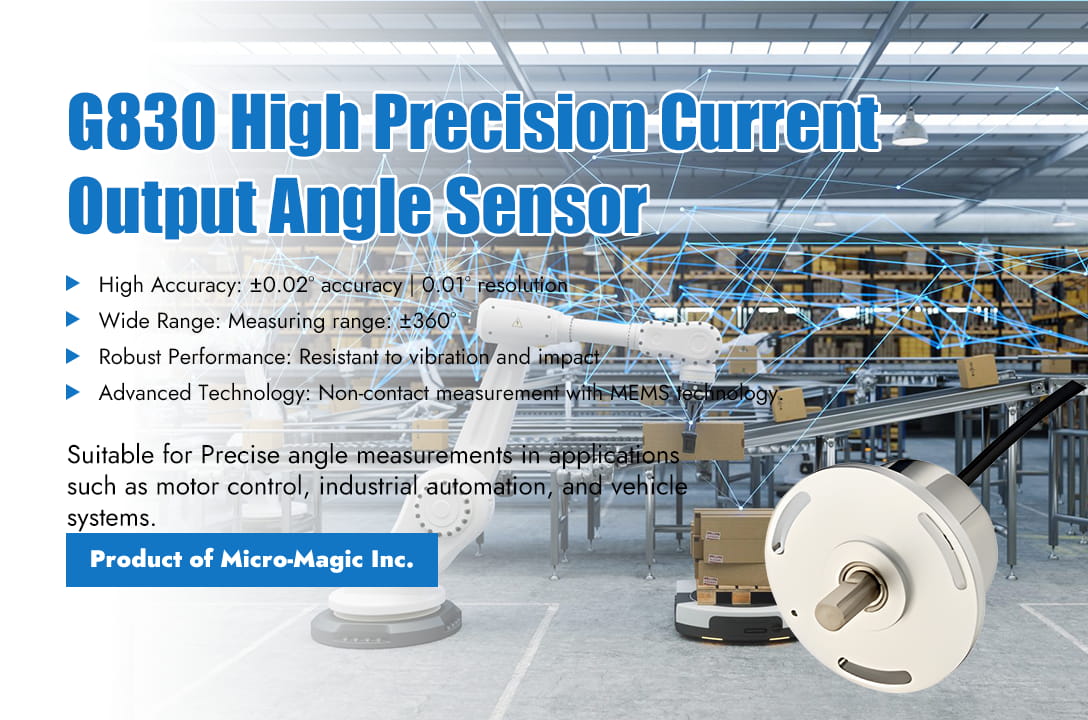
In the field of magnetic sensing technology, three-axis Hall sensors are sparking a precision revolution. This type of sensor achieves true three-dimensional spatial magnetic vector measurement by simultaneously detecting the magnetic field strength in the X, Y, and Z axes, completely breaking through the limitation of traditional single axis Hall sensors that can only detect vertical magnetic fields. The core technology lies in depositing special magnetic flux concentration materials (IMC®) onto the surface of CMOS chips. Enable sensors to capture magnetic field components parallel to the chip surface, combined with high-precision signal chain processing, to achieve 360° full angle position detection. This non-contact measurement method avoids mechanical wear and significantly improves long-term stability and reliability in harsh environments, bringing unprecedented precision control capabilities to modern industry and consumer electronics. Core Technological Advantages: High Precision, Strong Robustness, and Flexibility ■ High Precision and Resolution: The resolution reaches 14 bits (digital signal), equivalent to a resolution of 0.022 °, which is much higher than traditional optical encoders. The typical linearity error is ±1°, and the accuracy is maintained at 10 bits (0.35 °) after temperature drift compensation. The G830 angle sensor even achieves 16 bit ADC accuracy, with an angle error of only 0.02 ° and a temperature drift of 0.002 °/C, reaching the international leading level. ■ Exceptional Environmental Robustness: With strong temperature adaptability, resistance to mechanical tolerances and stray magnetic fields, the working temperature range can reach -40 ° C to+160 ° C, and is insensitive to magnet eccentricity and air gap changes (± 50% tolerance). The third-generation technology can resist stray field interference of 4 kA/m (such as electric vehicle motor magnetic field) and eliminate external interference through differential algorithms. ■ System Integration and Cost Optimization: No PCB packaging, supports direct soldering solutions such as DMP-4 (dual-mode packaging) and SMP-3 (single-mode packaging), eliminates the need for PCB boards, improves EMC/ESD reliability, and reduces system costs. Flexible magnetic circuit design, compatible with various types of magnets with radial/axial magnetization (ferrite, neodymium iron boron, etc.), smaller size and no need for complex calibration. Application Reach: From Automotive Core to Industrial Frontiers In the field of automotive electronics, three-axis Hall sensors have penetrated into key nodes of power transmission: ■ Chassis and safety system: steering wheel torque/steering angle detection (EPS), electronic brake pedal position sensing, accuracy directly affects the stability control efficiency of the vehicle body. ■ Powertrain control: Electronic throttle body, EGR valve angle feedback, with an error of ± 1° to ensure precise emission control. ■ New electric architecture: motor rotor position detection (replacing photoelectric encoders), gearbox gear position sensor. The industrial sector is also experiencing a wave of innovation: ■ Robot joint coding: realizes the detection of robotic arm posture, real-time monitoring of collaborative robot joint angles (0.1° repeatability accuracy), and adapts to industrial environments with anti oil pollution characteristics. ■ Motor control: BLDC motor commutation angle detection, replacing optical encoders. ■ Heavy machinery equipment positioning: Crane arm angle sensing, forklift lifting height detection, agricultural machinery steering angle feedback, IP equivalent protection against dust and water vapor erosion. Three Axis Hall Angle Sensor Related Products Micro-Magic Inc has produced a series of angle sensor products based on three-axis Hall technology, ranging from low to high precision, from low to high cost. Each product undergoes calibration, reverse and anti pulse peak voltage protection, and long-term aging stability testing before leaving the factory. Each process is precise and rigorous, ensuring reliability under different working conditions and long-term use cycles. Angle Sensor Performance Indicators Parameter G803 G810 G830 Unit Measuring range 0~360 ° 0~360 ° 0~360 ° Temperature drift 0.02 0.01 0.002 Resolution 0.05 0.01 0.01 ° Accuracy 1 0.5 0.05 ° Impact resistance 20000g,0.5ms,3 times/axis Anti-vibration 10grms,2~2000Hz Noise 5mV Average working time ≥55000h Output Digital TTL, RS232, RS485, RS422, CAN optional Voltage 0~5V, 0.5-4.5V, 0~10V optional Current 0-20mA, 4-20mA optional Working temperature range -40~85℃ Conclusion The three-axis Hall angle sensor, with its non-contact, high-precision, and multi-dimensional technological advantages, is quietly reshaping the underlying architecture of multiple industries. With the breakthrough of technological bottlenecks, especially the improvement of anti-interference ability and the integration of edge intelligence, this technology will develop towards miniaturization and intelligence, providing a more reliable "spatial perception eye" for the era of Internet of Things.
阅读更多留言